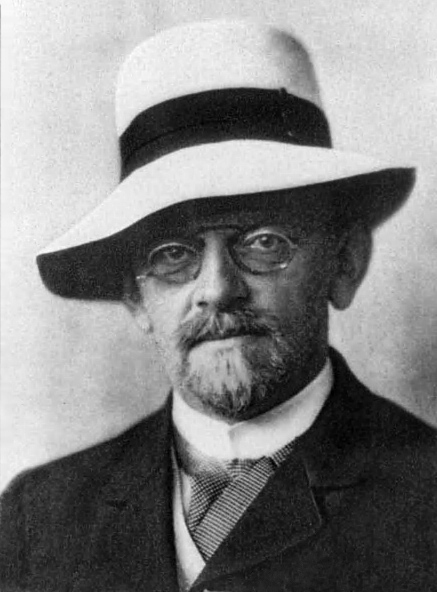
Fix the language, fix the rules. A proof becomes a finite string, and checking it is a question about symbols.
Hilbert wants two more things: a consistency proof by finitary means, and a procedure deciding every question.
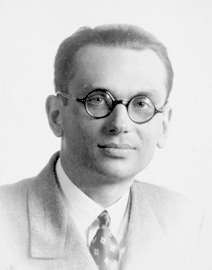
1931 -- Gödel: the consistency proof cannot exist.
1936: Church and Turing
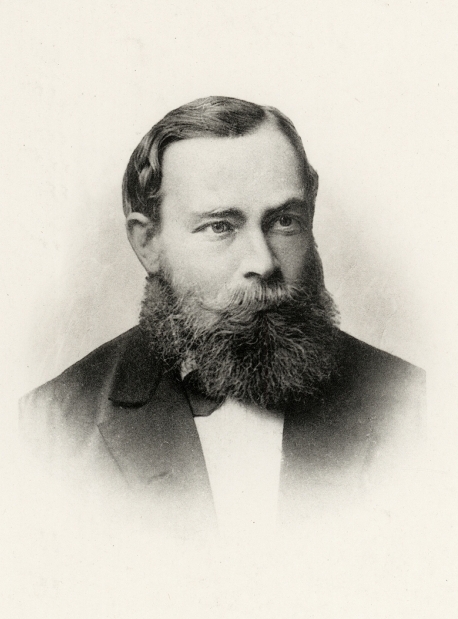
Alonzo Church
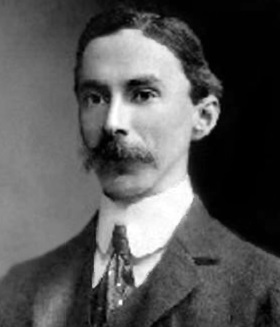
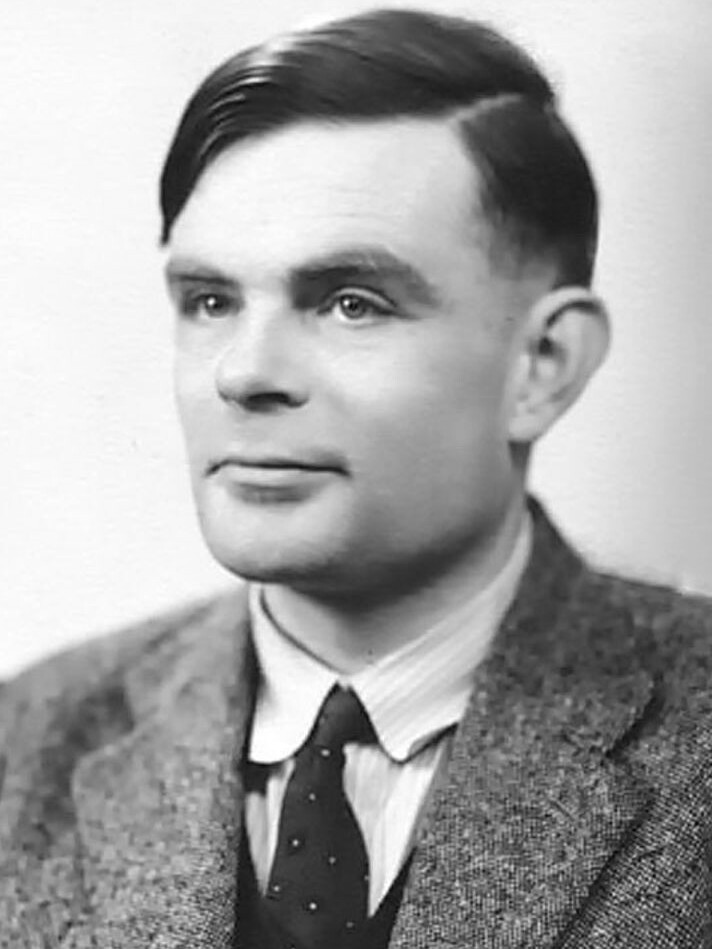
Alan Turing
1928 -- Hilbert and Ackermann: is there a procedure deciding whether a formula is provable? The Entscheidungsproblem.
1936 -- Church and Turing, independently: there is none.
First they had to say what a procedure is. Turing built his machine. Church built the \lambda-calculus.
The lambda calculus
A notation for functions, and nothing else.
\lambda x.\, x + 1 is the function adding one. The only rule is substitution: (\lambda x.\, x + 1)\, 3 becomes 3 + 1.
Numbers, pairs and recursion are not built in. They are written as \lambda-terms, and that is enough for everything Turing's machines compute.
Lean is this notation with types on top:
example:(funx:Nat=>x+1)3=3+1:=rfl
Checking is not finding
Question
Answer
Does this text prove the statement?
decidable, and cheap
Find a proof of the statement.
semi-decidable: ends if one exists
Decide whether a proof exists.
undecidable (1936)
You prove. The machine checks. That split is a theorem, not a gap in today's software.
1967: the first checker
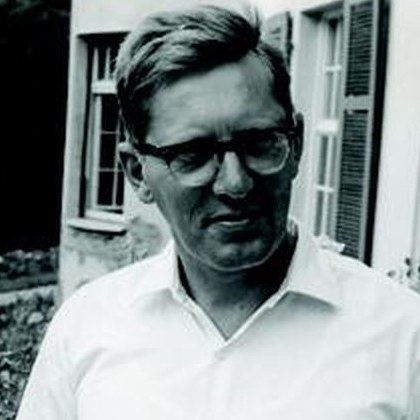
Nicolaas Govert de Bruijn
Automath -- a typed \lambda-calculus with dependent types, not set theory. The first machine-checked proofs.
1977 -- Landau's Grundlagen der Analysis through it, end to end.
Then Mizar 1973, LCF 1975, HOL, Isabelle 1986, Coq 1989.
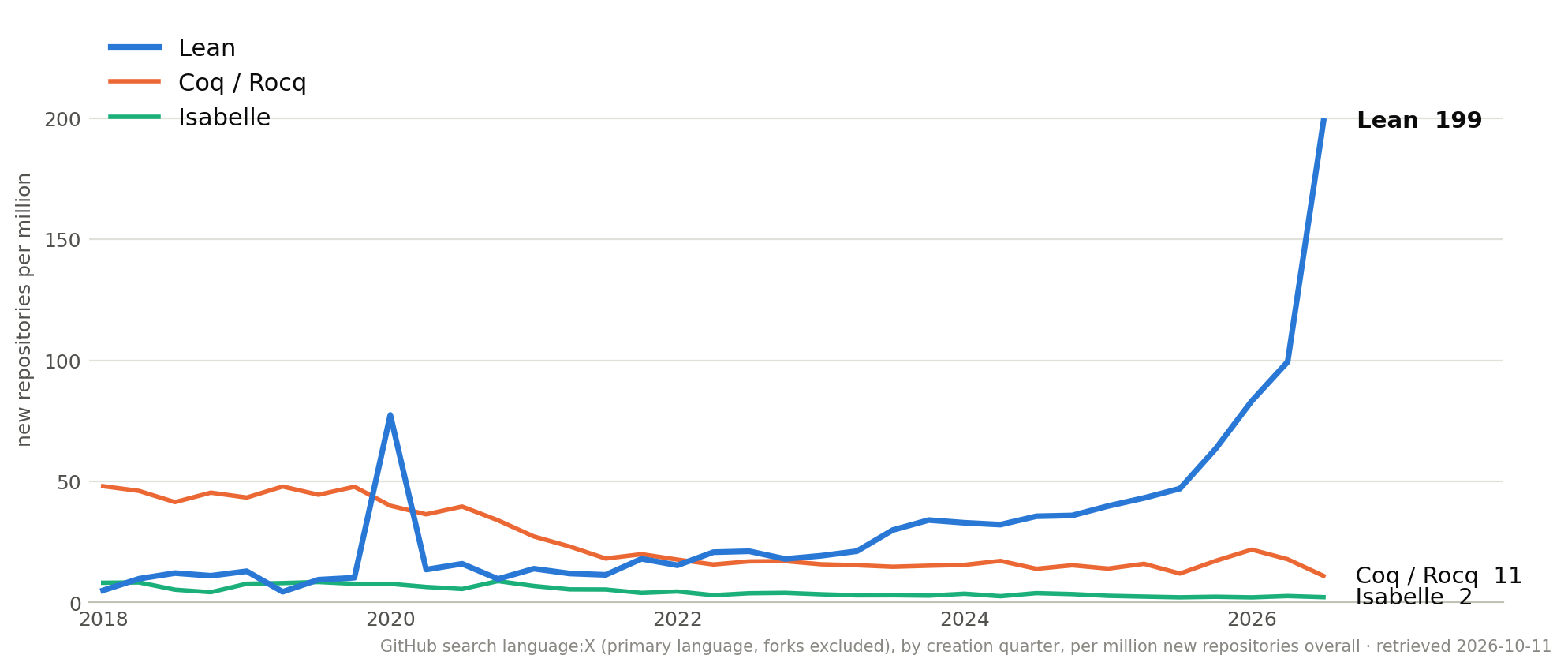
The idea is 150 years old. The tool is 20.
How it got here
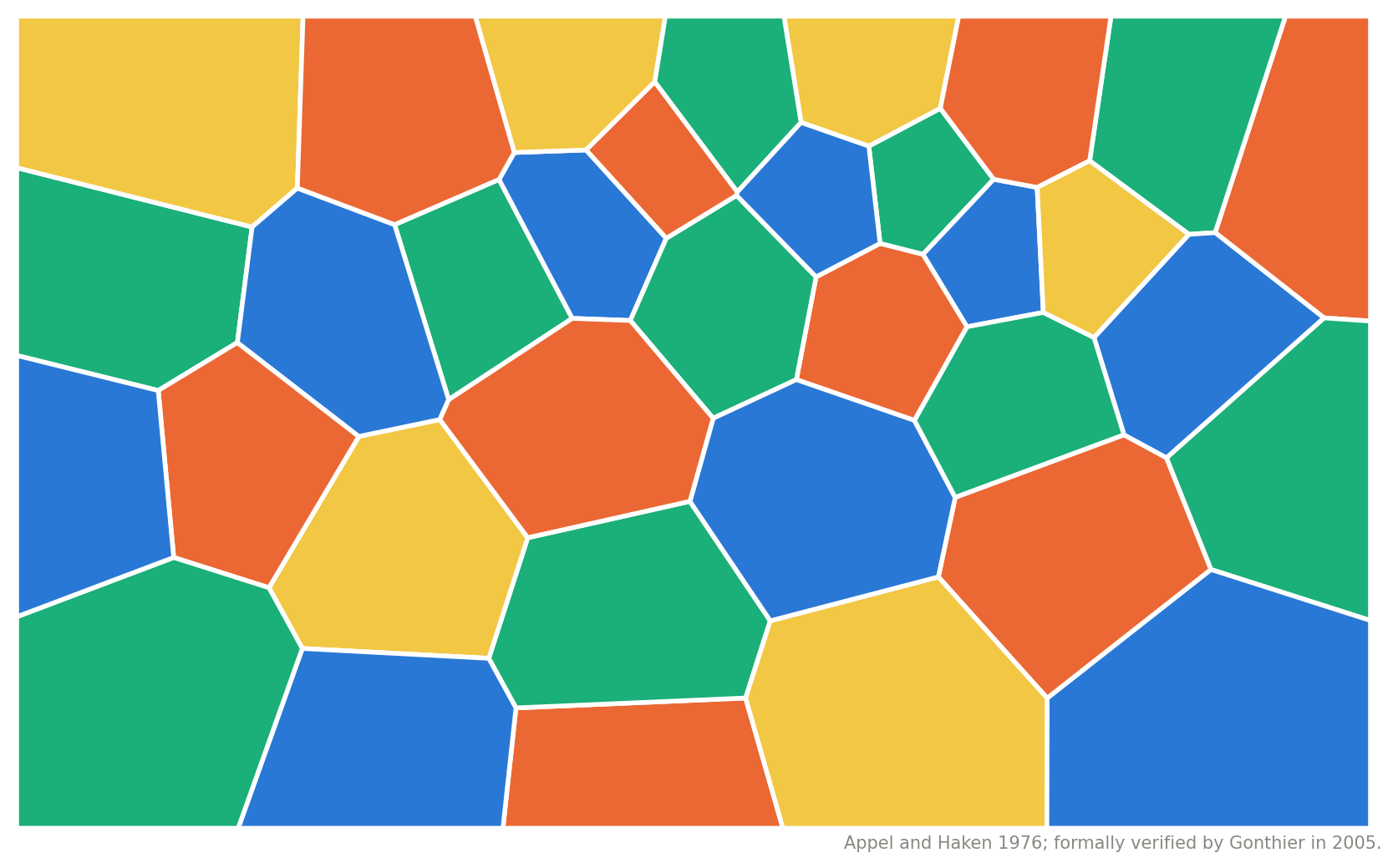
1976 -- the four colour theorem.
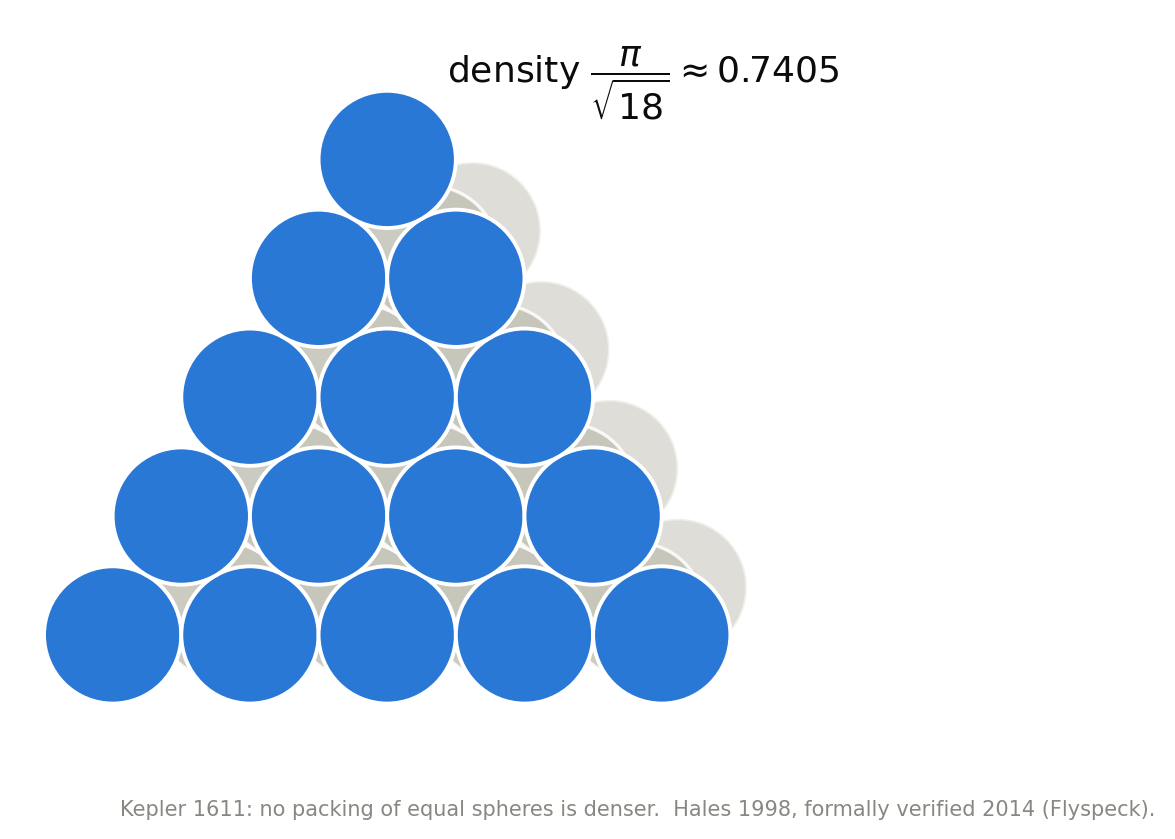
1998 -- the Kepler conjecture.
2013 -- Voevodsky concedes.
2020 -- the Liquid Tensor Experiment.
1976: four colours
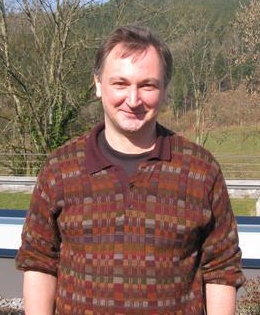
Georges Gonthier
Appel and Haken reduce the problem to a list of configurations, and an ordinary program checks it -- no proof assistant.
No human has ever read that part.
2005: Gonthier redoes all of it in Coq, case analysis included.
The Kepler conjecture
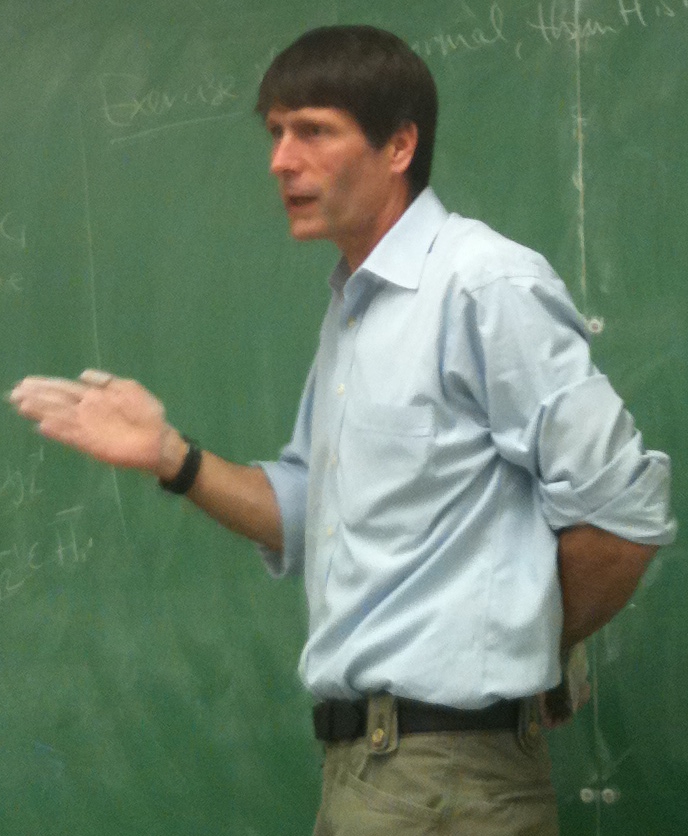
Thomas Hales
Hales announces a proof of Kepler's conjecture of 1611. Twelve referees, four years.
Verdict: ninety-nine percent certain -- and no better was possible. The Annals published it with the caveat attached.
Hales started Flyspeck. Complete formal proof in HOL Light and Isabelle, 2014.
2013: the author concedes
Vladimir Voevodsky
1989 -- Voevodsky and Kapranov identify \infty-groupoids with homotopy types.
Oct 1998 -- Simpson argues that it cannot be true, but cannot say which step.
Autumn 2013 -- Voevodsky accepts it. Fifteen years unused, and unrefuted.
Mathematics runs on a complex system of mutual trust based on reputations.
2020: a Fields medallist is unsure
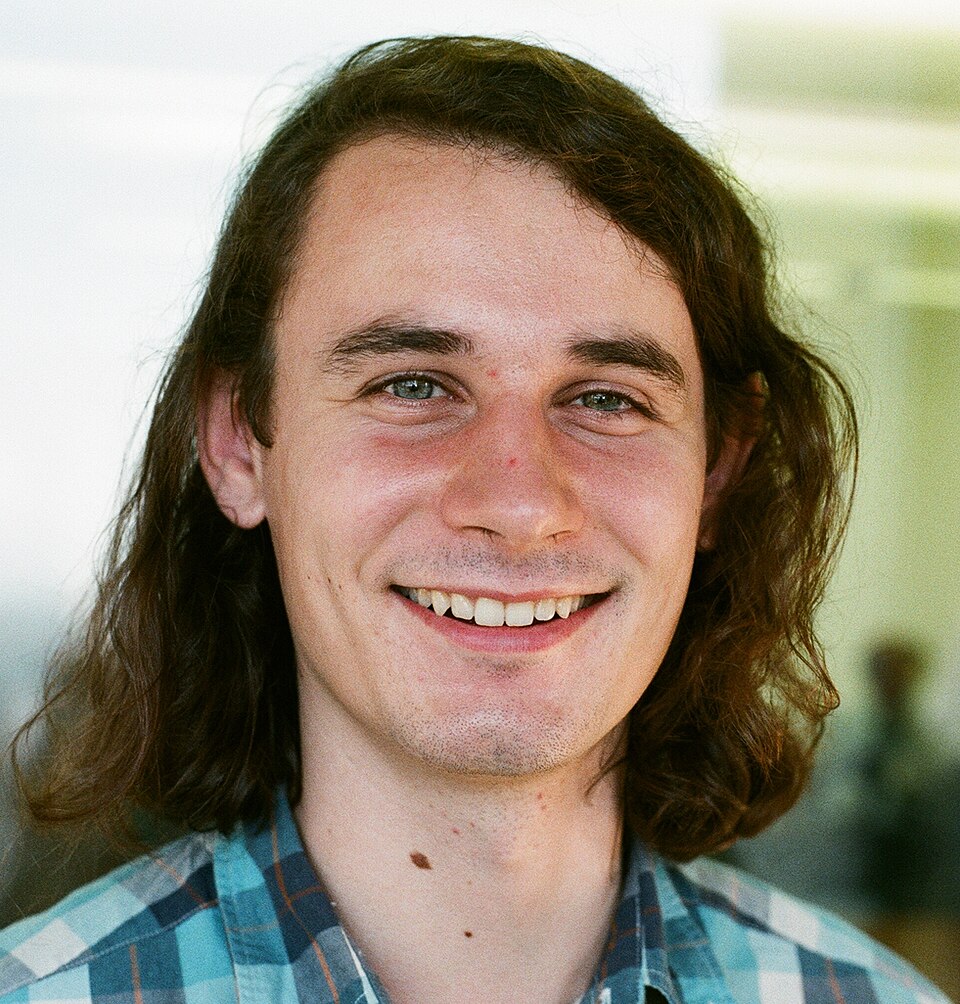
Peter Scholze
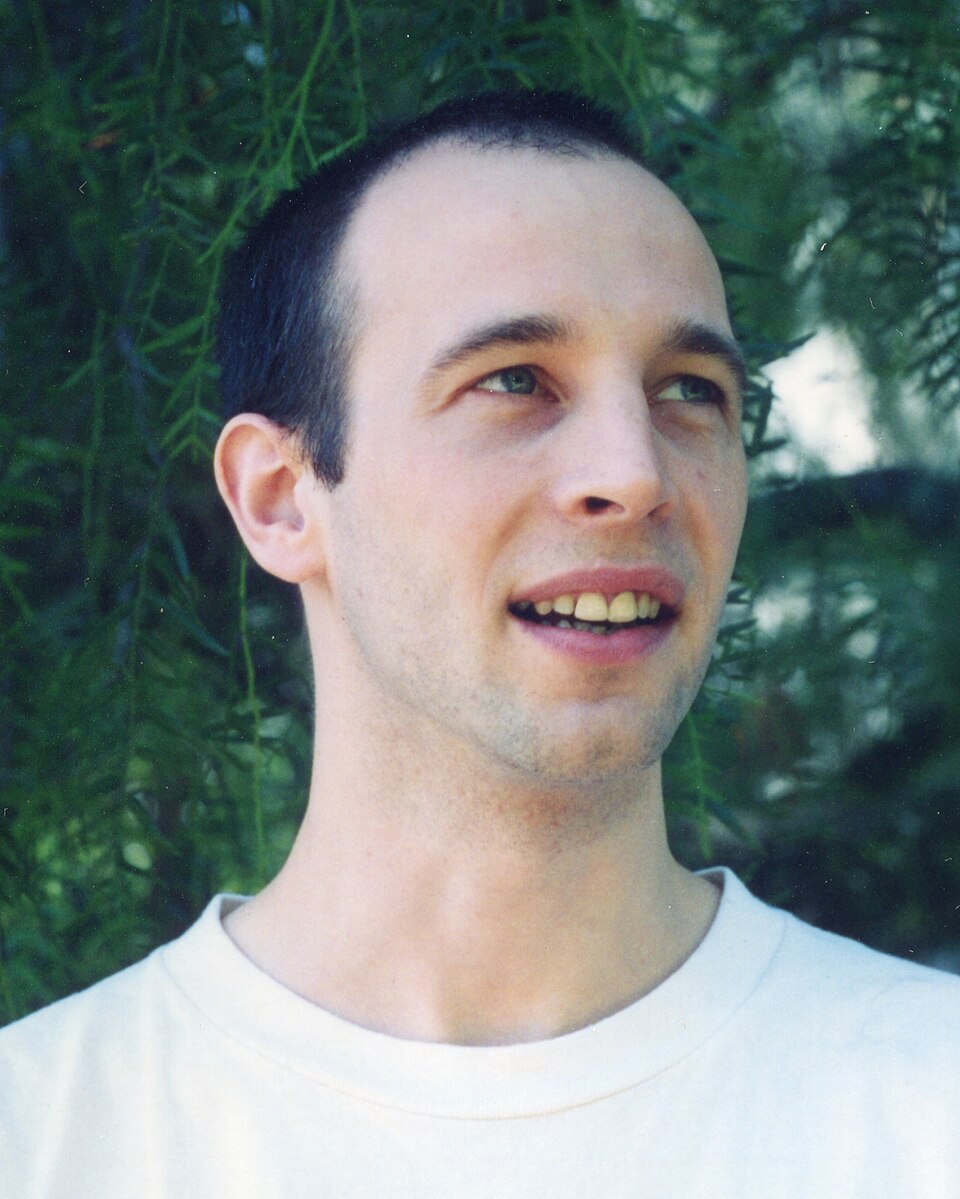
Johan Commelin
Scholze posts a challenge on Buzzard's blog: a theorem in condensed mathematics he is not certain of.
Liquid Tensor Experiment, led by Commelin. Finished July 2022.
The request came from a working mathematician, not from logicians. That is what had changed.
Perfectoid spaces, 2019
Kevin Buzzard
Johan Commelin
Patrick Massot
The problem: could an object as complicated as Scholze's perfectoid space be stated at all in a proof assistant?
They formalized a definition, not a theorem. Stating is a different problem from proving.
Sphere eversion, 2022
Patrick Massot
Floris van Doorn
Oliver Nash
The problem: Mathlib had no differential geometry, and Gromov's h-principle needs it.
So they built the API first and proved the theorem afterwards. That order is the ordinary shape of the work.
Freiman-Ruzsa, 2023
Timothy Gowers
Ben Green
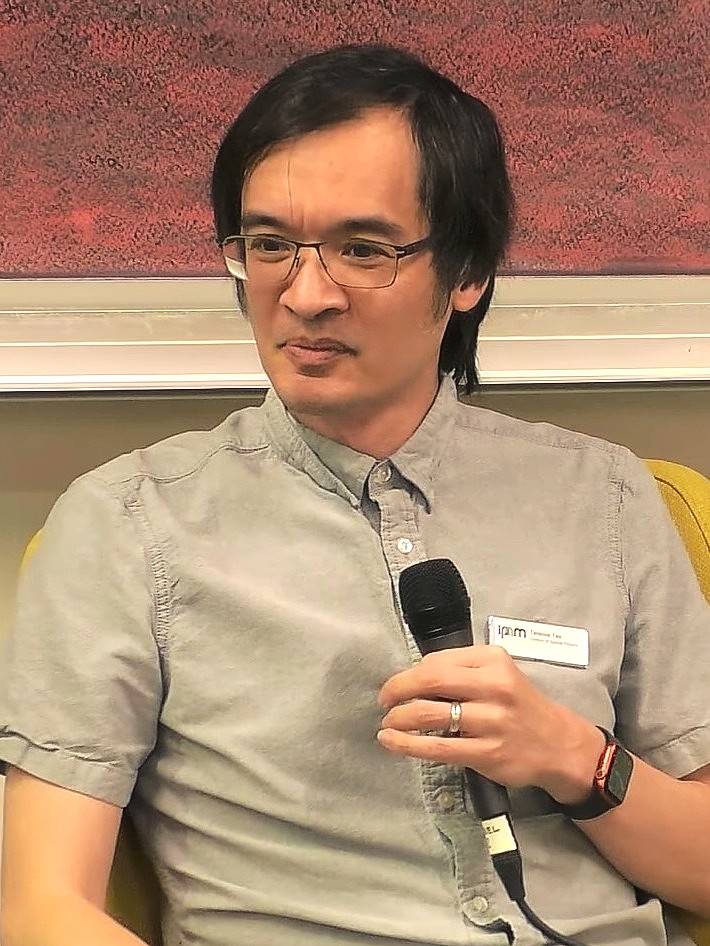
Terence Tao
Freddie Manners
The problem: a formalization took one team years, so it always came long after the paper.
A blueprint cuts the work into pieces with stated interfaces. Strangers in parallel, three weeks, before refereeing.
Equational Theories, 2024-25
The problem: 22 028 942 implications between 4 694 laws on magmas. Not deep -- but beyond any human team.
abbrevEquation3(a:Type)[Mula]:=∀x:a,x=x*xabbrevEquation4(a:Type)[Mula]:=∀xy:a,x=x*y-- Equation 4 implies Equation 3: take y := x.example(a:Type)[Mula](h:Equation4a):Equation3a:=funx=>hxx
Sphere packing, dim. 8 and 24
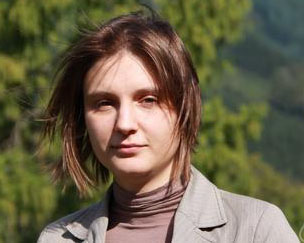
Maryna Viazovska
The problem: the mathematics was finished in 2016, and formalizing it still took a human project two years.
In Lean, on Mathlib. An autoformalizer closed dimension 8 in five days, February 2026.
Three systems
System
Logic
Library
Lean 4
dependent types
one: Mathlib
Rocq (Coq until 2025)
dependent types
many packages
Isabelle/HOL
simple type theory
the AFP
Only Isabelle has no dependent types. Its automation is the strongest of the three.
We use Lean because Mathlib exists.
Mathlib
One library, one repository, one version. Everything in this course imports it.
Interactive theorem proving. A small kernel checks every logical step of a proof, and the editor reports what remains to be proved as you write. This is not the older use of computers in mathematics, which was to work through many cases.
Mathematical content. The mathematics in the first half is deliberately easy, because explaining a proof to a computer requires understanding it first, and a proof of more than a few lines has to be planned so that the commands -- tactics -- fit together. The second half goes deeper into the mathematics.
Functional programming. Inductive types, structures, typeclasses and monads, needed both to use Lean and to read Mathlib. These are spread across the Lean and Mathematics parts rather than collected in one chapter.
Type theory. Lean rests on dependent type theory: the Curry-Howard correspondence, dependent types, the universe hierarchy, and Lean's axioms.
Mathematics in Mathlib. How the library organizes order theory, the algebraic hierarchy, filters (a single framework for limits), topology, measure theory and discrete probability. Textbooks rarely treat these from the point of view of formalization.
Proof engineering. Automation tactics, searching Mathlib, and the common pitfalls of a large formal library.